
Clean · Look · Photograph · Report
Solar Panel Cleaning and Inspection
Solar panel maintenance and cleaning in one visit: we wash the array with pure water, then look closely at the glass, frames, clamps, rails and the cabling we can see, and photograph anything that needs attention. You get a clear report that says what is fine, what to watch and what needs an electrician.
This is a visual check, not an electrical service, and we say that plainly because the difference matters for safety and for your warranty. It suits owners who want more than a wash without paying for a full electrical inspection every year. For the cleaning method itself, see our main page on solar panel cleaning in Melbourne.
The service
What does solar panel maintenance and cleaning include?
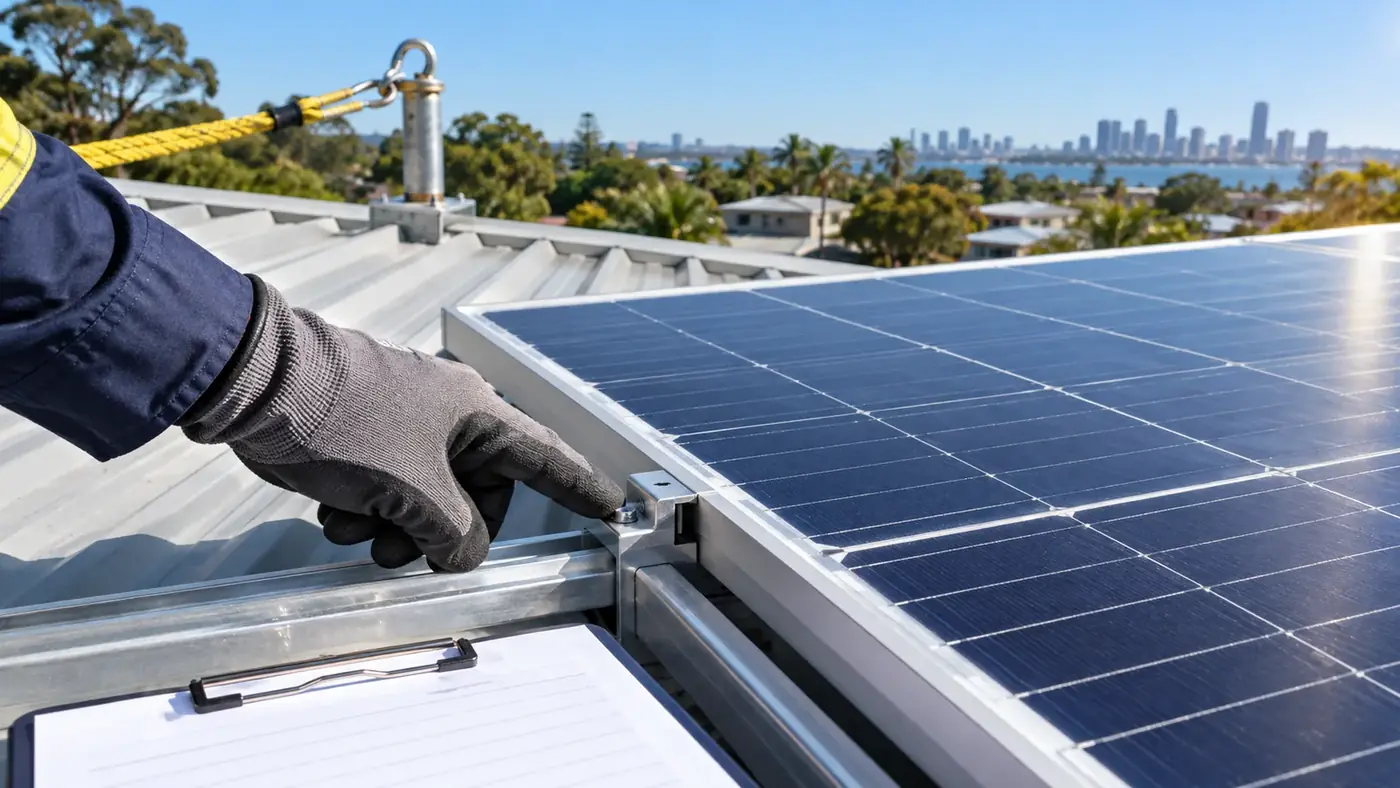
Our solar panel maintenance and cleaning visit is a full pure-water clean followed by a visual inspection of everything we can safely see from the array: glass, frames, clamps, rails, roof fixings, exposed cabling and the space under the panels. Every finding is photographed and graded in the report.
Cleaning first makes the inspection better. Hairline cracks, scorch marks and snail trails in the cells are easy to miss under a film of dust and obvious once the glass is clear and wet. The check adds a little time to the visit rather than a separate call-out. It does not cover roof repairs, pest proofing or anything inside the roof space.
A clean and check earns its keep at certain moments: when a system passes five years old, after a hailstorm or a week of strong winds, before a house goes on the market, when possums or birds have been active on the roof, or when generation has dropped and the glass alone does not explain it. In those cases the extra look usually answers the question of whether to call an electrician at all.
| Visit type | What happens | Who does it | What you get |
|---|---|---|---|
| Clean | Pure-water wash of every panel and frame | Our cleaning crew | Before and after photos |
| Clean and visual check | The wash, plus a close look at glass, mounts and visible cabling | Our cleaning crew | Photo report with each item graded |
| Electrical service | Testing of isolators, cabling, earthing and the inverter | A licensed A-grade electrician | Test results and any repairs |
The list
What do we inspect during a clean?
We inspect seven things on every clean and check: the glass, the frames, the clamps, the mounting rails, the roof fixings and flashing, the cabling visible around the array, and the space underneath for nests and debris. Each gets a photo and a grade of fine, watch or electrician.
- Glass. Cracks, chips, scorch marks and snail trails across the cells.
- Frames. Dents, corrosion, lifted seals and lichen under the lip.
- Clamps. Loose, missing or twisted clamps holding each panel.
- Rails. Rails that have shifted, sagged or started to rust.
- Roof fixings. Cracked tiles, lifted flashing and gaps around brackets.
- Visible cabling. Cables rubbing on metal, sagging, sun-damaged or chewed.
- Under the array. Nests, leaves and droppings trapped beneath the panels.
The grades are deliberately simple. Fine means nothing to do. Watch means something has started to change, such as a clamp that has turned slightly or lichen creeping under a frame, and it goes on the list for the next visit. Electrician means the photo should reach a licensed electrician or your installer before anyone touches it, and we never grade something as fine just to keep the report short.
A solar panel cleaning checklist for between visits
Most of these can be done from the ground or at the switchboard in ten minutes, a few times a year. Anything odd is worth a photo and a message to your installer. If the inverter shows an error code, write it down with the date and time, because that is the first thing an installer will ask for.
- Look at the array from the street for dirty bands or droppings
- Check the inverter screen for warning lights or error codes
- Compare this month's generation with the same month last year
- Watch for birds flying in and out under the panels
- Clear leaves and cobwebs from around the inverter
- Note trees that have grown enough to shade the roof
The boundary
What needs a licensed electrician?
Anything electrical needs a licensed electrician: testing isolators, opening junction boxes, checking earthing and insulation, and diagnosing or repairing the inverter. We do none of that. When our visual check finds something in that territory, we photograph it and tell you to call one.
Energy Safe Victoria wants solar servicing done by an A-grade licensed electrician, preferably one holding Solar Accreditation Australia accreditation, and suggests booking that service at least once every two years. A clean and check does not replace that; it fills the gap between services and gives the electrician photos to work from.
We look and photograph
- Cracked or scorched glass
- Loose clamps and shifted rails
- Cables rubbing, sagging or chewed
- Lifted flashing and broken tiles
- Nests and debris under the array
An electrician tests and repairs
- DC and AC isolators and switches
- Cable insulation, connectors and earthing
- Inverter faults and error codes
- Junction boxes and water damage inside them
- Any repair to wiring or electrical parts
The line is drawn by the rules, not by us. The Clean Energy Regulator's inspection checklist runs to more than 100 items, from array wiring and earthing to signage, including whether cabling is protected from sunlight and from animals. Chewed or sun-cracked cable is exactly the kind of thing we can spot from the array and an electrician must fix.
The same checklist requires a shutdown procedure to be permanently fixed at the inverter or the main switchboard. Even with the system switched off there, panels sitting in daylight still hold voltage in their own cables, which is why nobody but an electrician should disconnect a connector or open a box on the roof. We keep our hands on the glass and the brush.
After a hailstorm, a clean and check is also a quick way to find out whether the glass took any hits. Dents in frames and star cracks show up clearly on a clean panel, and dated close-up photos give your insurer and your installer something concrete to assess. Whether a claim is accepted is up to the insurer, but the photos save a separate trip onto the roof.
Book
How do you book a clean and check?
Ask for a clean and visual check when you request a quote, and include your panel count, storeys and suburb. The check is added to the same visit, so there is no second trip, and the graded photo report arrives by email once we have packed up.
- Request a quote and tick the visual check option.
- Receive a fixed price covering both jobs.
- Get the report, then forward any electrician items to your installer.
The check adds a little time on site, and the quote shows it as its own line so you can see exactly what it costs. Owners with a service plan through their installer can send the report to them before the next electrical service.
- Before and after photos of each section
- Close-ups of every watch or electrician item
- A plain note on what we saw and where
Questions
What else do owners ask about the check?
Two questions come up almost every time someone books a clean and check. For anything electrical, your installer or a licensed electrician is the right person to ask.