How to Clean Solar Panels on the Roof (or From the Ground)
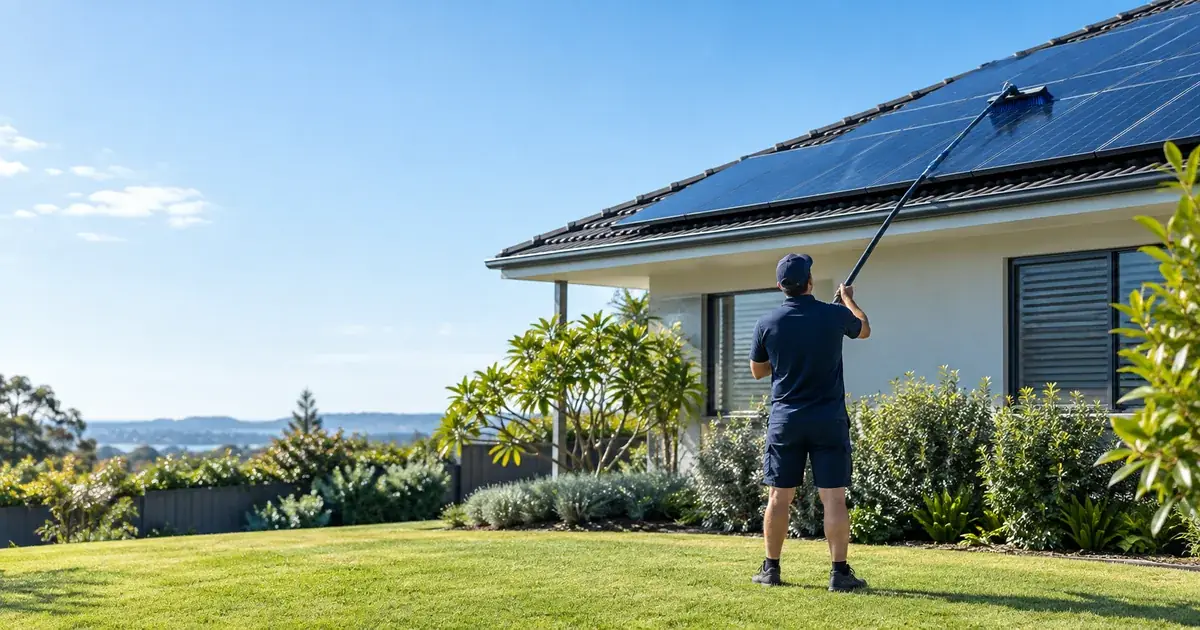
The safest way to clean solar panels on the roof is to not go up there at all. Stand on the lawn or driveway with an extension pole and a soft brush, and wash the array from below. If a pole cannot reach, the job belongs to someone with anchors, a harness and insurance.
This guide covers the ground method in detail, how far a pole really needs to reach on single and double storey homes, what goes wrong when people climb up, and what automatic cleaning kits can and cannot do. For the general cleaning method, see the rest of our solar cleaning guides.
Key points
- Clean from the ground whenever a pole can reach.
- Single storey arrays usually need a 4 to 6 metre pole.
- Ladders and roof walking cause most serious injuries.
- Never lean a ladder on gutters or against the array.
- Sprinkler kits rinse but cannot scrub off droppings.
- Double storey and steep roofs are a professional job.
Reach
Can you clean roof panels without going up?
Yes. Cleaning solar panels on the roof from the ground works for most single storey homes and many double storey ones, using a lightweight extension pole with a soft brush and a hose feed. You never need to stand on the roof, and the glass gets the same gentle wash.
How far you can reach decides everything. The pole has to climb past the gutter and then along the slope of the roof to the top row of panels, which is further than it looks from the ground. The diagram below gives a rough idea for typical Melbourne homes.
Rough reach guide
On a single storey home the gutter usually sits around three metres up, so a pole of four to six metres reaches most arrays from the lawn. On a double storey home the gutter can sit twice as high, and reaching the top row can take eight to ten metres of pole.
Long poles bend and get heavy quickly, which is where homeowners run out of control before they run out of reach.
Approximate figures for typical homes; measure your own roofline before buying a pole.Choosing a pole
Pick the shortest pole that reaches your top row, not the longest one on the shelf. Fibreglass is sturdy and does not conduct electricity; carbon fibre is lighter and stiffer at length but costs more. A water-fed pole, with the hose running inside it to the brush head, lets you rinse and brush in one motion. Whatever you buy, practise extending and controlling it at full length on a wall or fence before the first real clean.
The pole method
How do you clean rooftop solar panels from the ground?
To clean rooftop solar panels from the ground, set up on firm, level ground with a clear view of the array, switch the system off, rinse the glass, then brush each row from the top down with long, light strokes, rinsing as you go. Finish with a slow rinse and let the panels dry.
- Check for overhead lines. Look up before extending anything. A pole near a power line is the one hazard on this job that can kill instantly, so keep well clear and stop if a line runs over the array.
- Find a stable spot. Stand on flat, dry ground far enough back to see the top row. Soft garden beds and sloping paths make a long pole hard to control.
- Shut the system down. Use the posted shutdown procedure at the inverter or switchboard before any water reaches the panels.
- Extend the pole in stages. Add sections only as far as you need, keeping the pole close to upright. The flatter it gets, the heavier it feels and the harder the brush lands.
- Rinse, then brush the top row first. Wet the glass, then work across the highest row with light, overlapping strokes so runoff falls onto rows still to be done.
- Work down row by row. Move your feet rather than stretching sideways, and rinse the brush often so grit does not travel with it.
- Rinse and restart. Finish with an unhurried rinse, wait until the glass has dried off, then power the system up again and confirm the inverter reports normal operation.
A water-fed pole, where the hose runs up inside the pole to the brush head, makes the job far easier than a separate hose and brush, because rinsing and scrubbing happen together. Look for one made of fibreglass or carbon fibre, since aluminium is heavy at length and conducts electricity.
Pick a calm day as well as a cool one. At eight metres, even a moderate breeze turns a pole into a sail, pulling the brush off line and your balance with it. If the treetops are moving, put the job off until the air is still.
Hazards
What goes wrong when people clean roof panels?
Most things that go wrong on roof panel jobs are falls: a ladder slipping on wet ground, a foot going through a brittle tile, or someone stepping backwards off an edge while looking up. The rest are damage to the panels from standing, kneeling or resting tools on them.
Leaning a ladder on the gutter
Gutters are not built to carry a person's weight, and a wet lawn lets the ladder foot slide out.
Walking on tiles to reach the array
Old terracotta and concrete tiles crack underfoot, which leads to leaks as well as falls.
Standing or kneeling on panels
Weight on the glass can crack cells invisibly, cutting output for years without an obvious sign.
Cleaning a wet or dewy roof
Morning dew, moss and fresh rinse water turn a roof slippery in seconds, even at a gentle pitch.
Working alone
Nobody to steady the ladder, call for help or notice a problem. Many roof falls happen with no one else home.
Using a metal pole near wires
Aluminium poles conduct electricity. Overhead service lines to the house are closer than most people think.
construction injury claims for falls from height, across four years to December 2024, are recorded in WorkSafe Victoria figures. A home roof has the same drop and none of the site controls.
Automatic kits
Can you clean solar panels on the roof automatically?
You can rinse solar panels on the roof automatically with a sprinkler kit plumbed along the top of the array, but rinsing is not the same as cleaning. Water alone moves loose dust; it will not loosen dried bird mess, frame lichen or a smoky residue, so a brush is still needed now and then.
Handing it over
When is a roof job one for professionals?
A roof job is one for professionals when the array sits on a second storey, when the pitch is steep, when the roof is slate, old terracotta or wet, or when any panel is beyond the reach of a pole you can control. In those cases the fall risk is the deciding factor, not the cost.
Metal roofs deserve a special mention. Colorbond gets slippery with the lightest film of water and hot enough to burn by late morning in summer, and its low pitch tempts people to walk on it. Treat a metal roof as off limits for DIY even when it looks flat and easy.
Professional crews reach most double storey arrays from the ground with carbon-fibre poles long enough for the job. When a panel is out of reach, they work from the roof clipped to an anchor, following a written plan, with insurance behind them. That combination is hard to match with a borrowed ladder on a Saturday morning.
Not sure which side of the line your roof falls on? Snap the house from across the road and send it through; a cleaner can normally judge the reach from that one picture. It costs nothing to ask, and it is a better way to find out than climbing up to check.
Roof too high or too steep?
Our crews bring poles long enough for most second storeys, and anchored access for the panels beyond them. Read how a home visit runs on our residential solar panel cleaning page.
Questions
What do people ask about roof panels?
Three questions about cleaning panels that sit up on the roof rather than at ground level. The short version of every answer: keep your feet on the ground.
Ask about my roof